

A data centre can have space for another rack and still struggle to support the heat it produces. As more computing power is concentrated into individual servers and racks, cooling becomes a constraint on what a facility can accommodate.
AI and high-performance computing are bringing this challenge into sharper focus. Liquid cooling offers a way to remove heat closer to its source, making it an important consideration for facilities preparing for higher-density equipment. (source)
So, is liquid cooling the future? For some applications, it is already part of the infrastructure. For others, the right approach will involve air cooling, liquid cooling, or a combination of both.
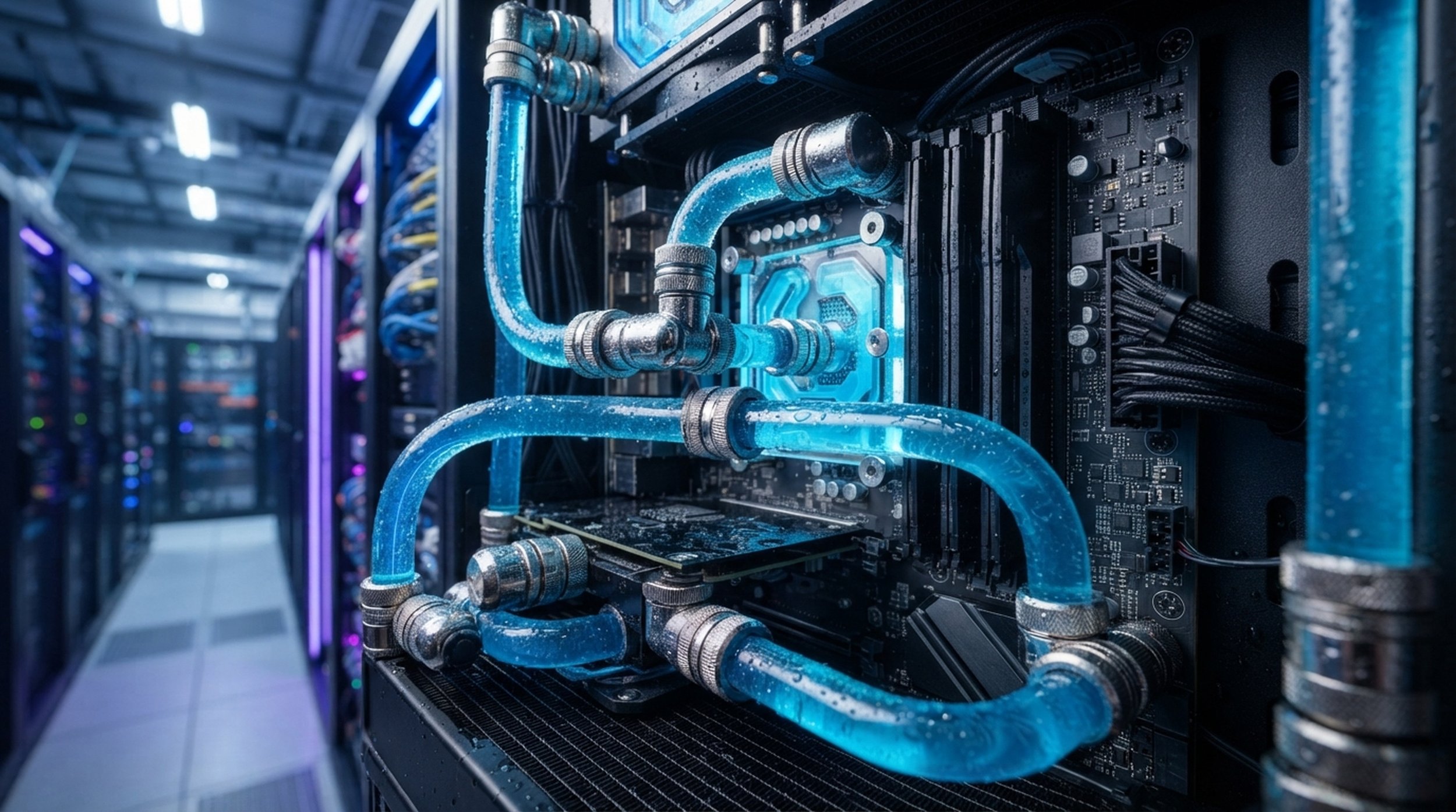
Why Liquid Cooling Is Gaining Attention
Air cooling moves heat away from IT equipment using airflow. Its effectiveness depends on getting enough cool air to the equipment and removing the heated exhaust without allowing it to recirculate.
As heat becomes more concentrated, achieving this through airflow alone becomes more challenging. Direct liquid cooling can capture heat at components such as processors and transfer it into a circulating coolant. (source)
This makes the equipment’s cooling requirements an early planning decision. A proposed hardware upgrade needs to be assessed against the facility’s ability to support it.
What Does Liquid Cooling Involve?
Liquid cooling covers several approaches, with different implications for the equipment and the room around it.
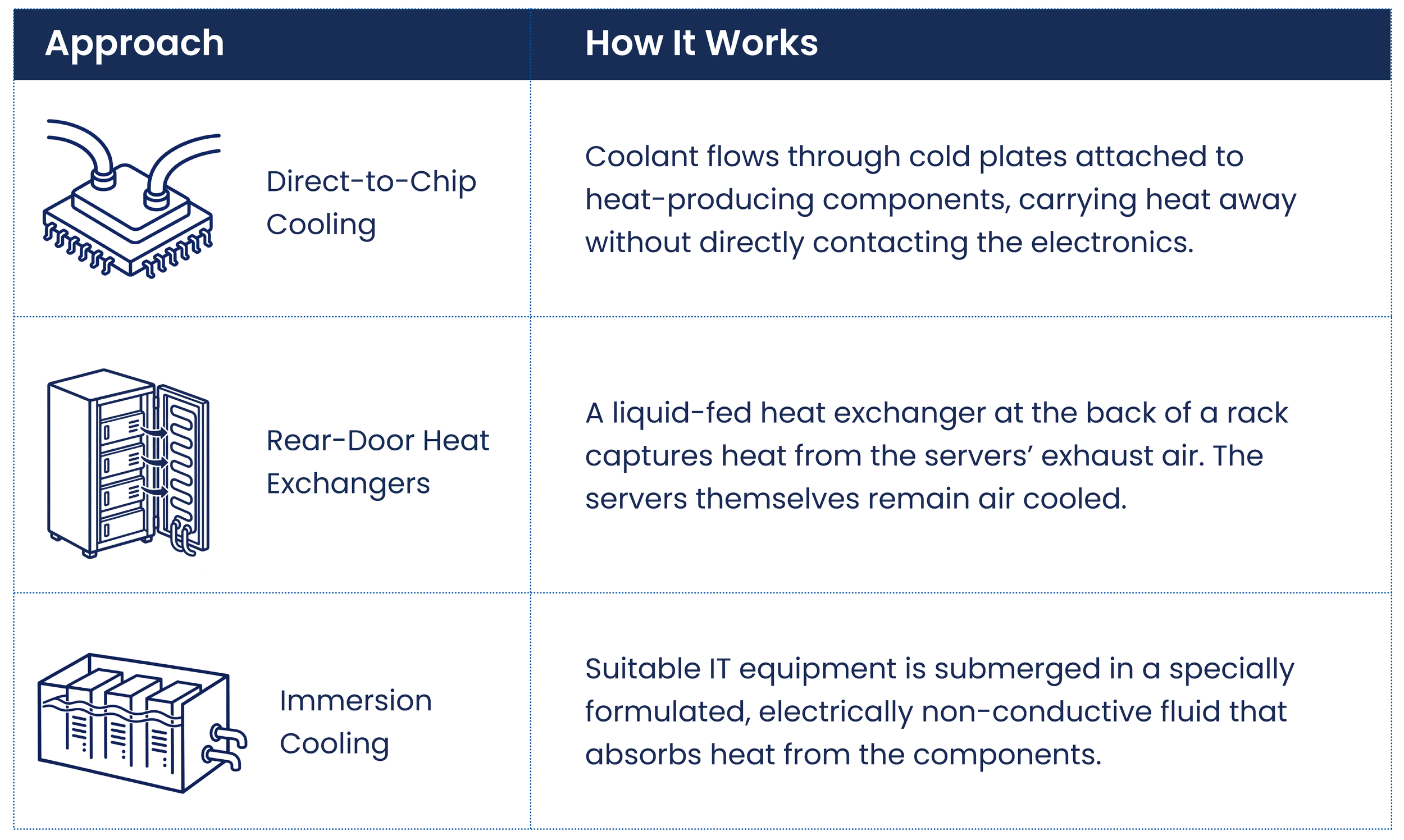
These approaches require different arrangements for coolant distribution, equipment access and servicing. They should be assessed against the hardware being installed and the facility supporting it. (source)
Air Cooling Still Has a Role
Installing liquid cooling does not necessarily remove the need for airflow management.
For example, NVIDIA’s GB200 reference configurations use liquid cooling for specified components while retaining air cooling for others. This illustrates why a liquid-cooled rack can still place a cooling demand on the room. (source)
In a mixed facility, the design needs to account for the heat captured by liquid and the heat left for the air-cooling system to handle. Containment, airflow paths and room cooling capacity still need attention.
For an existing data centre, introducing liquid cooling to a defined area may be a practical option, with expansion linked to actual equipment requirements. (source)
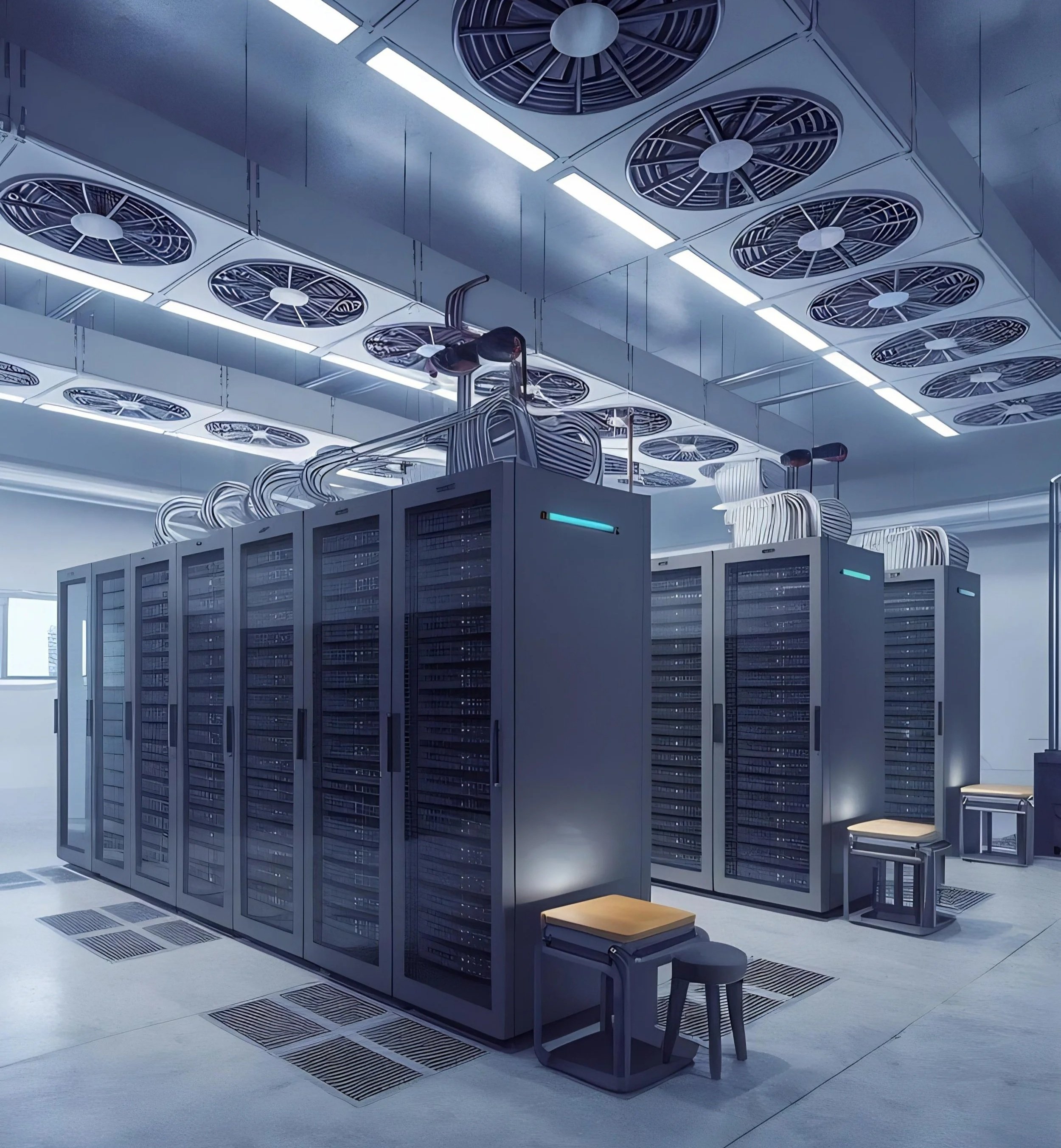
Efficiency Depends on the Whole System
Liquid cooling can create opportunities to improve efficiency, particularly where equipment can operate with warmer coolant. Depending on the hardware requirements and local climate, this may allow more heat to be rejected outdoors without relying on mechanical refrigeration. (source)
However, capturing heat from a processor is only one stage of the process. That heat still needs to travel through the cooling system and ultimately be released or put to another use.
Water consumption also depends on how heat is rejected. A recirculating liquid loop inside the data hall does not establish whether the wider facility uses evaporative cooling towers or dry coolers. The US Department of Energy identifies dry cooling, where suitable, as a way to reduce water use. (source)
Any projected savings should therefore be assessed for the proposed equipment, operating conditions and complete cooling system.
What Changes for Facility Planning?
Bringing liquid cooling into a data centre involves more than connecting pipes to racks. The supporting space and services need to be considered together.
Key planning questions include:
Cooling Infrastructure: Where will coolant distribution units, pipework and connections go, and how will they connect to the heat rejection system?
Structural Capacity: Can the floor and supporting structures accommodate the proposed racks, cooling equipment and distribution systems?
Access and Maintenance: Is there sufficient space to service valves, connections and cooling equipment?
Open Compute Project guidance addresses pipe routes and maintenance space as part of liquid cooling integration. AMD’s design guidance also highlights the structural implications of heavy racks and liquid cooling equipment. (source)
Operational questions deserve equal attention:
Reliability: How will the system detect leaks, manage condensation risks and maintain cooling during maintenance or a component failure?
Existing Operations: How will installation affect live equipment, cable routes and any underfloor airflow? (source)
These requirements deserve attention before equipment is ordered or the room layout is fixed.
Planning for the Equipment Ahead
Liquid cooling has an established role in high-density computing. Whether it belongs in a particular facility depends on the equipment, its cooling requirements and the infrastructure available to support it.
For a new build or upgrade, a useful starting point is to establish the expected rack loads, the hardware’s specified cooling requirements and the likely expansion path. That gives the project team a basis for deciding what to install now and what to allow for later.
Preparing for liquid cooling may begin with reserving space, checking structural capacity and protecting future pipe routes. Those decisions can be made well before the first liquid-cooled rack arrives. (source)